← Back to equipment catalog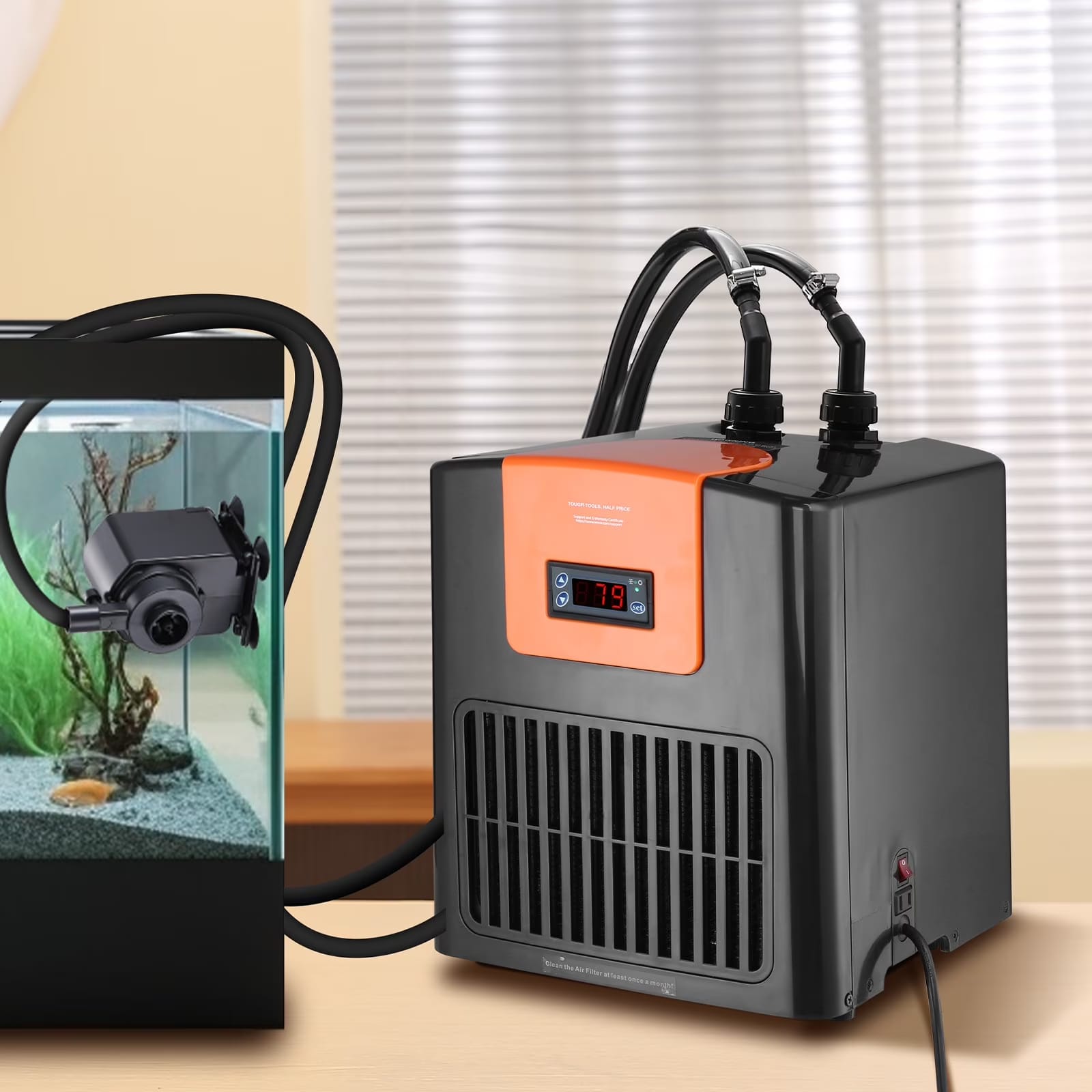
Hero image is from the maintained catalog (brand / product publicly-available assets or vetted stock). The physical product takes precedence.
Temperature
Aquarium chiller
heater
Used for: Tank maintenance
Description
A chiller is bought for the fish, but the thing that hurts them in warm water is mostly oxygen. FAO's aquaponics manual states the relationship plainly: as water temperature rises the solubility of oxygen falls, so warm water holds less dissolved oxygen than cold water does. Demand does not fall with it. The manual's standing advice for warm places and the hottest part of the year is more aeration, and it singles out dissolved oxygen as the water quality parameter with the most immediate and drastic effect, with fish dying within hours of exposure to low levels. Heat has a second edge. High temperatures mean both less dissolved oxygen and more unionised ammonia, which is the toxic form, so a hot tank raises the poison and lowers the margin at the same time. The manual's troubleshooting table puts the alarm line at water above 33 degrees, where fish stop eating and plants begin to wilt and die. Before reaching for a compressor, notice what FAO reaches for first. Shade every water surface. Insulate. Choose animals matched to the ambient temperature where you actually live, since cold water fish will not tolerate warm water at all and the manual gives trout an upper limit of 18 degrees. Its listed remedies for overheating run in that order too: shade the tank wall, ventilate at night, then set up a cooling system. The reason for the order is cost, and the manual says so twice. Changing the temperature of the water can be very energy intensive and expensive, and while thermal isolation, heaters and coolers do achieve a steady level, they may be costly where energy is dear. A chiller is what you buy when shade, ventilation and species choice have run out. Nothing here sizes one. No cooling capacity, no temperature differential, no figure of any kind for a chiller appears in this literature, and the old description's list of species that require one was sourced from nowhere.
Source
Figures on this page were read off these pages. Manufacturers and databases do change or retire pages; if a link is dead, tell us with the correction link below.
Keep this species? Spot anything off?