← Back to equipment catalog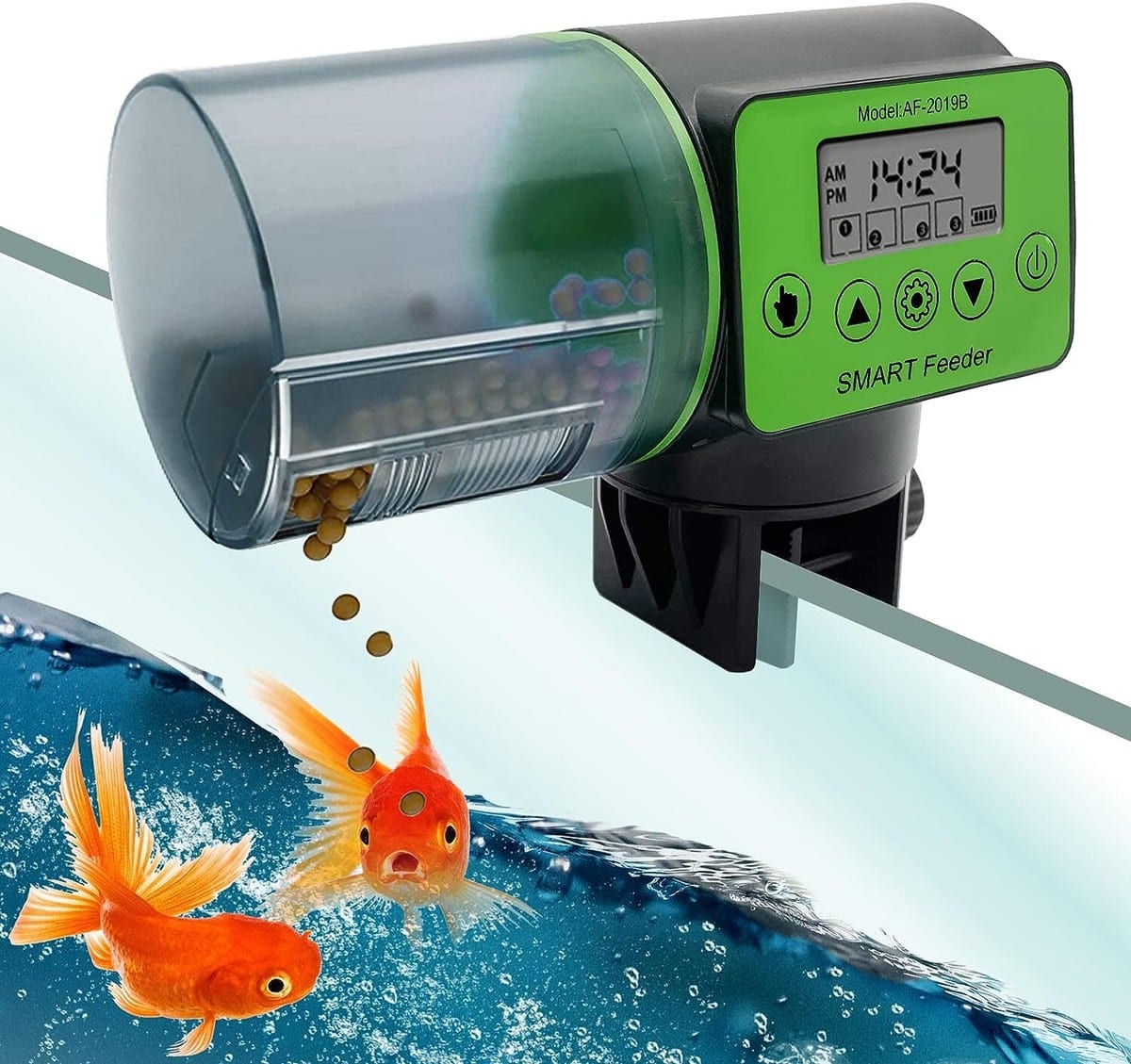
Hero image is from the maintained catalog (brand / product publicly-available assets or vetted stock). The physical product takes precedence.
Accessories
Automatic fish feeder
accessory
Used for: Tank maintenance
Description
An automatic feeder releases food on a timer instead of by hand. The practice is old and industrial: FAO's guide to recirculation aquaculture notes that fish in a fish farm require feeding several times a day, and that automatic feeding can also be an integrated part of the central control system that monitors oxygen levels, temperature, pH, water levels and motor functions. The reason a farm ties feeding into that system is a detail worth borrowing. FAO writes that integration allows the timing of the feeding to be coordinated precisely with a higher dosage of oxygen as the oxygen consumption rises during feeding. Feeding is not a neutral event in a closed system; it is the moment the fish demand more oxygen and the moment the waste load starts, which is why the guide places feed and oxygen on the same clock. FAO also treats the feeder as a device that drifts. Calibration of feeders appears on the farm's regular service list, next to calibrating the pH meter and the oxygen probes and testing the alarms. A feeder that has not been checked against what it actually drops is a portion-control device with an unknown portion, which is the failure mode a timer hides: the schedule keeps running whether or not the amount is right. No source consulted here publishes a portion size, an interval or a hopper capacity for a home tank, so this page gives none.
Source
Figures on this page were read off these pages. Manufacturers and databases do change or retire pages; if a link is dead, tell us with the correction link below.
Keep this species? Spot anything off?