← Back to equipment catalog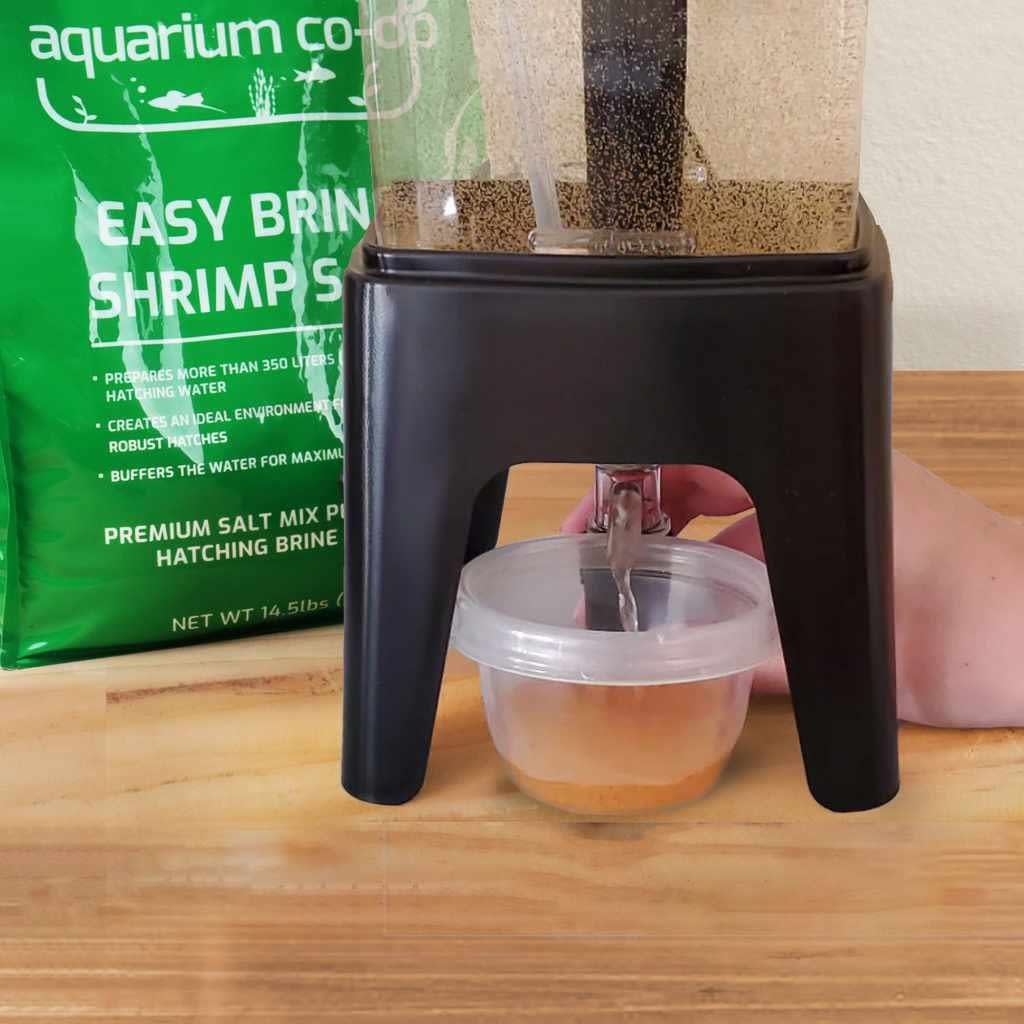
Hero image is from the maintained catalog (brand / product publicly-available assets or vetted stock). The physical product takes precedence.
Accessories
Brine shrimp hatchery
accessory
Used for: Shrimp tanks, Breeding tanks, Tank maintenance
Description
A brine shrimp hatchery is a vessel for incubating Artemia cysts until they hatch into nauplii. Among the live diets used in the larviculture of fish and shellfish, FAO writes, nauplii of the brine shrimp Artemia constitute the most widely used food item, and over 2000 metric tons of dry Artemia cysts are marketed worldwide every year for on-site hatching into 0.4 mm nauplii. FAO's manual on the production and use of live food for aquaculture sets out what the vessel has to do, and the shape is the first thing it names: best hatching results are achieved in containers with a conical bottom, aerated from the bottom with air-lines, because cylindrical or square-bottomed tanks will have dead spots in which Artemia cysts and nauplii accumulate and suffer from oxygen depletion. Transparent or translucent containers, the manual adds, make the hatching suspension easier to inspect, especially when harvesting. Six parameters decide the outcome, in FAO's list: aeration, temperature, salinity, pH, cyst density and illumination. Aeration has to be sufficient to maintain oxygen levels above 2 mg/L, preferentially 5 mg/L. Temperature is preferentially kept in the range of 25-28 degrees C; below 25 degrees C cysts hatch more slowly, and above 33 degrees C the cyst metabolism is irreversibly stopped. Optimal hatching is obtained in the range 5-35 g/L of salinity, and the pH must remain above 8 during the hatching process so as to ensure optimal functioning of the hatching enzyme, with up to 1 g of sodium bicarbonate per litre added when low salinity water is used. Cyst density may be as high as 5 g/L for small volumes under 20 litres but should be decreased to a maximum of 2 g/L for larger ones. Strong illumination, about 2000 lux at the water surface, is essential at least during the first hours after complete hydration.
Sources
- fao.org — https://www.fao.org/4/w3732e/w3732e0m.htm
- fao.org — https://www.fao.org/4/w3732e/w3732e0n.htm
Figures on this page were read off these pages. Manufacturers and databases do change or retire pages; if a link is dead, tell us with the correction link below.
Keep this species? Spot anything off?