← Back to equipment catalog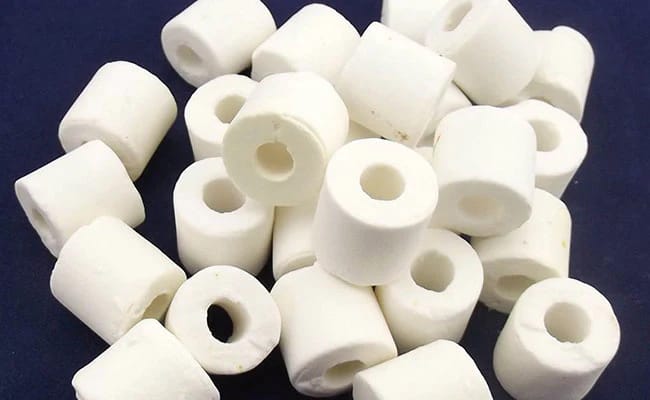
Hero image is from the maintained catalog (brand / product publicly-available assets or vetted stock). The physical product takes precedence.
Filtration
Ceramic rings
filter
Used for: Tank maintenance
Description
Ceramic rings are biofilter media: short porous tubes that go in a filter so nitrifying bacteria have somewhere to live. Two published systems name them in that role. A 2026 laboratory rearing system for blackfly larvae filtered a 42 L rectangular aquarium with a cylindrical filter packed with layers of perlon and ceramic rings colonized by nitrifying bacteria. A 2025 aquaponic system describes its biofilter the same way: inside the biofilter there are ceramic rings and plastic media which serve as a substrate for nitrifying bacteria growth. Both sentences say substrate, and that is the whole of what the sources claim for the object: surface for a film of bacteria to grow on, in a place where water keeps passing. FAO's guide to recirculation aquaculture explains why surface is the thing being bought, and it is worth quoting exactly because it also explains the limit. Biofilters are typically constructed using plastic media, the guide says, and the bacteria will grow as a thin film on the media thereby occupying an extremely large surface area. Then comes the part that gets forgotten: the aim of a well-designed biofilter is to reach as high a surface area as possible without packing the biofilter so tight that it will get clogged with organic matter under operation. More media crammed into the same box is not more filtration once water stops moving through it. Two things this page does not say, because no source here says them. FAO is describing plastic media on a farm, not ceramic rings in a canister, so the material is the papers' word and the surface-area principle is FAO's. And no source published here gives a litres-of-media per litres-of-tank figure, a pore size or a replacement interval, so neither does this page.
Sources
- pmc.ncbi.nlm.nih.gov — https://pmc.ncbi.nlm.nih.gov/articles/PMC13256054/
- pmc.ncbi.nlm.nih.gov — https://pmc.ncbi.nlm.nih.gov/articles/PMC12560244/
- fao.org — https://www.fao.org/4/i4626e/i4626e.pdf
Figures on this page were read off these pages. Manufacturers and databases do change or retire pages; if a link is dead, tell us with the correction link below.
Keep this species? Spot anything off?