← Back to equipment catalog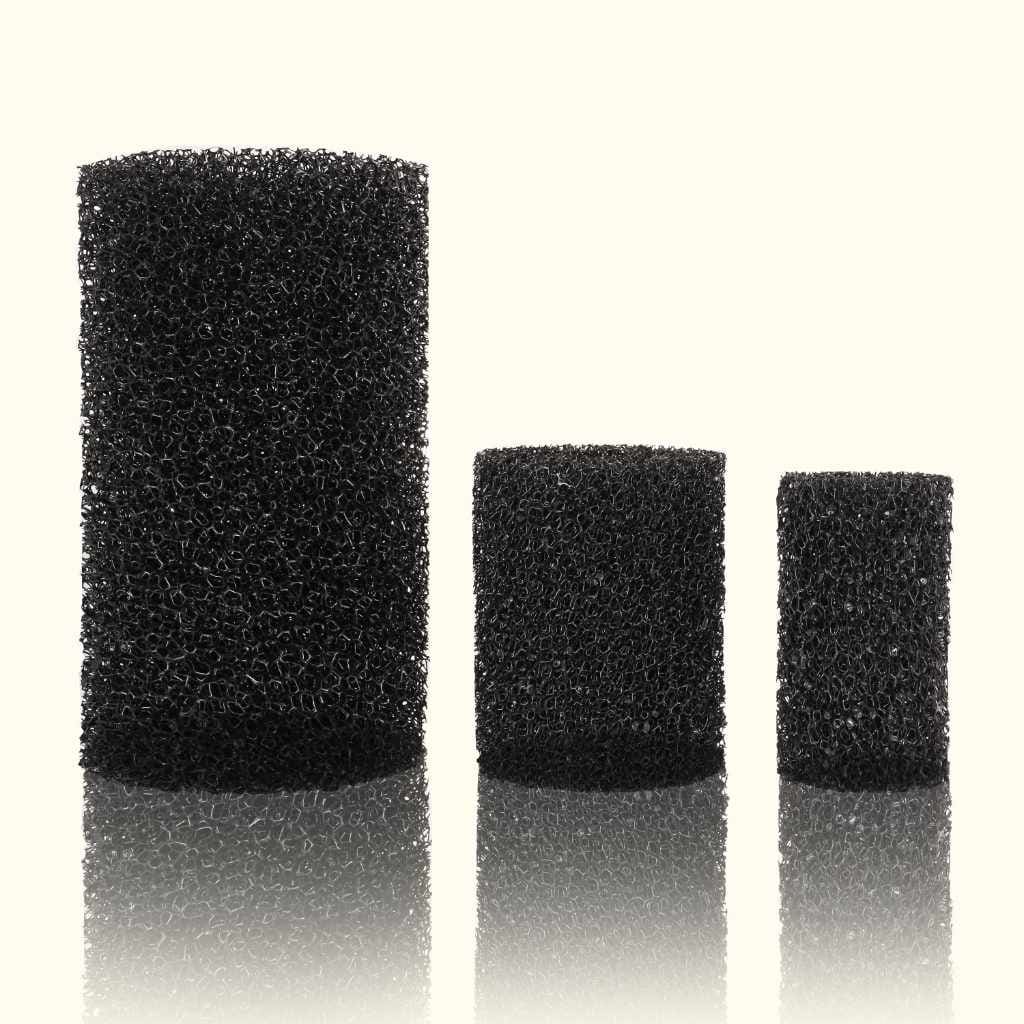
Hero image is from the maintained catalog (brand / product publicly-available assets or vetted stock). The physical product takes precedence.
Filtration
Filter sponge
filter
Used for: Tank maintenance
Description
A filter sponge does two jobs at once, and the sources separate them cleanly. The mechanical job is the one the Merck Veterinary Manual describes for filtration in general: mechanical filters remove particulates to reduce their negative effects on water quality and fish health, and to improve water clarity, which facilitates observations. The biological job is what the sponge is really being bought for. FAO's guide to recirculation aquaculture explains what any biological medium is for: biofilters are typically constructed using plastic media giving a high surface area per cubic metre of biofilter, the bacteria will grow as a thin film on the media thereby occupying an extremely large surface area, and the aim of a well-designed biofilter is to reach as high a surface area as possible without packing the biofilter so tight that it will get clogged with organic matter under operation. Those bacteria are the reason the filter exists: nitrifying bacteria convert ammonia into nitrite and finally to nitrate. Merck names the sponge form directly in its advice on home aquarium biosecurity. A hobbyist can set up a quarantine tank using an inexpensive 10 gallon tank, sponge filter, small aeration pump, and heater, and before buying new fish the hobbyist can run the previously disinfected sponge filter in an established tank that is free of disease to inoculate the sponge with nitrifying bacteria. That practice, Merck writes, will help avoid the common water quality problems that occur in newly set up aquaria. It is also the reason a sponge should not be rinsed clean in tap water on the same day the rest of the filter is serviced.
Sources
- merckvetmanual.com — https://www.merckvetmanual.com/exotic-and-laboratory-animals/aquaculture/production-methods-in-aquaculture
- fao.org — https://www.fao.org/4/i4626e/i4626e.pdf
- merckvetmanual.com — https://www.merckvetmanual.com/exotic-and-laboratory-animals/aquarium-fish/management-of-aquarium-fish
Figures on this page were read off these pages. Manufacturers and databases do change or retire pages; if a link is dead, tell us with the correction link below.
Keep this species? Spot anything off?