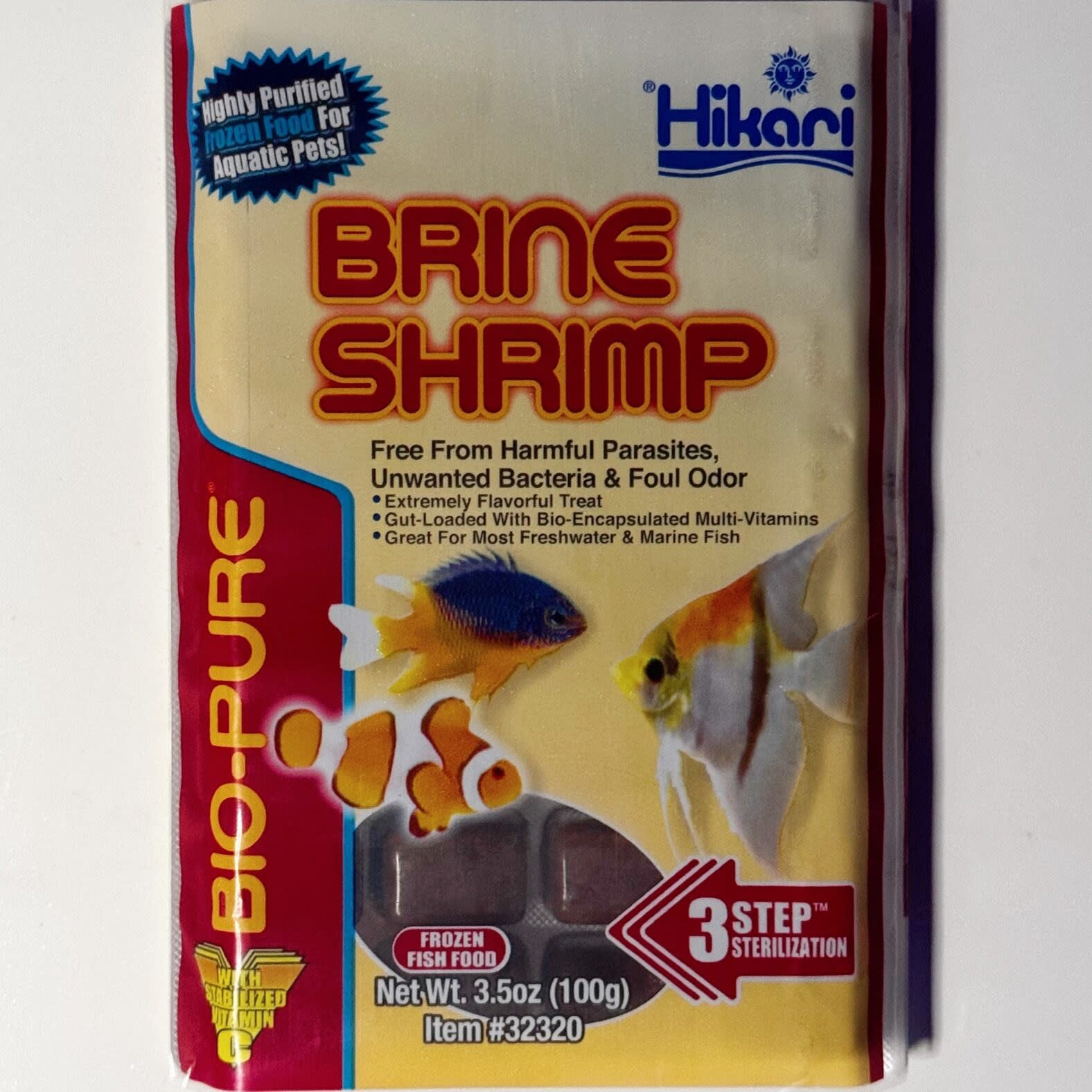
Representative photo. The product you buy may differ in size, colour or packaging.
Frozen brine shrimp
food
Used for: Shrimp tanks, Tank maintenance
Description
Almost all the brine shrimp in the aquarium trade is frozen, and FAO explains why instead of treating it as a convenience. Of the more than 3000 tonnes of Artemia biomass sold into this sector, over 95 percent goes out frozen, because it comes from a restricted number of natural sources and shipping live animals between continents costs too much. Freezing done properly is a specification rather than just a step. The manual is exact about it. Wash the harvested biomass thoroughly in fresh water and freeze it immediately, while the animals are still alive, spread in layers about 1 cm thick in bags or ice trays, in a quick freezer running at least as cold as -25 C. Handled that way the adults' exoskeleton is not damaged, so the thawed cubes yield intact animals that do not pollute the water by leaking body fluids. That last clause is the entire quality question for a frozen food, and it is settled in the packing plant long before the cube reaches your tank. The composition is documented too, and it favours the adults. Cultured juveniles and adults run 49.7 to 62.5 percent protein against 41.6 to 47.2 percent for freshly hatched instar-I nauplii, and are richer in essential amino acids. Fat is the variable one, at 9.4 to 19.5 percent, and FAO is clear that the lipid profile reflects whatever the Artemia itself was fed. A batch is only as good as the culture behind it, which is not something the packaging can tell you. Nothing on that page mentions carotenoids, colour enhancement or any vitamin figure. Thawing a cube in a cup of tank water and feeding what the fish clear in a couple of minutes is ordinary practice, not FAO text.
Source
Figures on this page were read off these pages. Manufacturers and databases do change or retire pages; if a link is dead, tell us with the correction link below.
Was this page useful? Spot anything wrong?