← Back to equipment catalog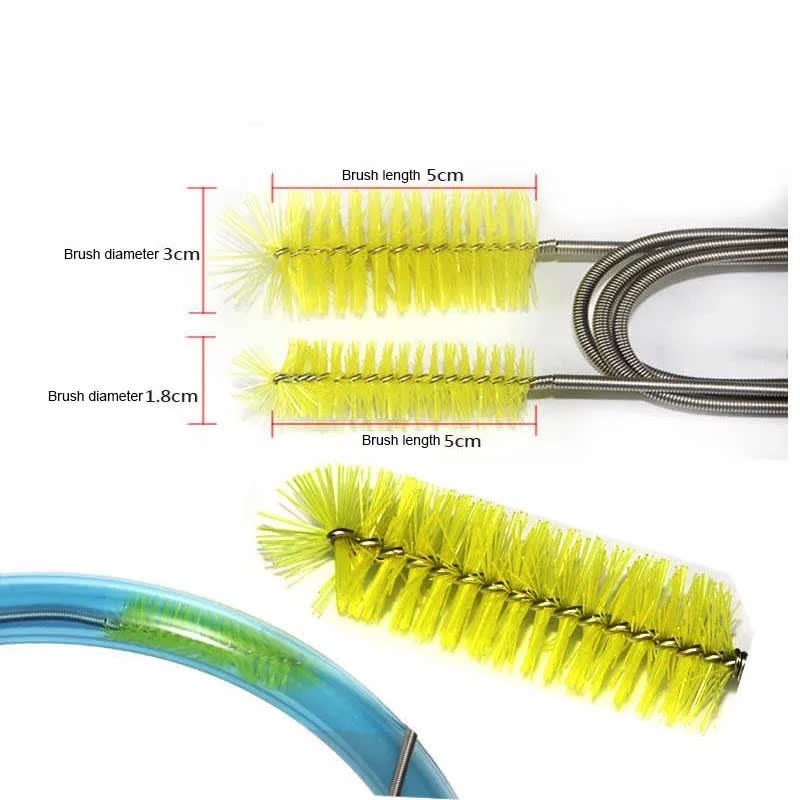
Hero image is from the maintained catalog (brand / product publicly-available assets or vetted stock). The physical product takes precedence.
Accessories
Hose brush
accessory
Used for: Tank maintenance
Specifications
| Specification | SLSON filter brush | Patelai hose brush set |
|---|---|---|
| Length | 61 inch (155 cm) | 61.02 inch/ 155 cm, 35.43 inch/ 90 cm and 78.74 inch/ 200 cm |
| Head size | 0.6x2.2 inch and 1.5x2.6 inch | Big brush diameter 1.18 inch/ 30 mm, small brush diameter 0.7 inch/ 18 mm or 0.59 inch/ 15 mm |
| Shape | Double ended | Double ended |
| Material | Soft nylon bristles and stainless steel | Soft nylon silk and stainless steel |
| Pieces | 1 | 3 |
Values as listed by each source when checked on 2026-09-15. Listings change.
Description
A hose brush is a long, flexible brush with bristles at both ends, pushed through filter tubing to clean the inside. We found no reference work on the tool, so the details below come from two Amazon listings, one with about 2,500 ratings and one with nearly 1,000. SLSON's filter brush is 61 inches long overall, with soft nylon bristles on stainless steel and two heads of different sizes, about 0.6 by 2.2 inches and 1.5 by 2.6 inches. SLSON says it cleans small-diameter pipes, water pumps, filters and connectors, removing built-up gunk and even algae from inside the tubing. The listing's directions are to use a mild detergent and warm water, rinse thoroughly with cool water, keep the tube as straight as possible, and work the brush gently back and forth in short strokes, gradually going further into the tube. It warns against aggressive use. Patelai sells a set of three double-ended brushes, one each in blue, yellow and black, made of soft nylon and stainless steel. The blue brush is 155 cm (61.02 inches) long, the yellow 90 cm (35.43 inches) and the black 200 cm (78.74 inches). The listing gives bristle heads of 30 mm and 18 mm across for the blue and yellow brushes, and 30 mm and 15 mm for the black. Patelai says the brushes bend to follow curved pipes such as U-shaped tubes, and that they should be pushed in gently with a back and forth motion.
Sources
Figures on this page were read off these pages. Manufacturers and databases do change or retire pages; if a link is dead, tell us with the correction link below.
Keep this species? Spot anything off?