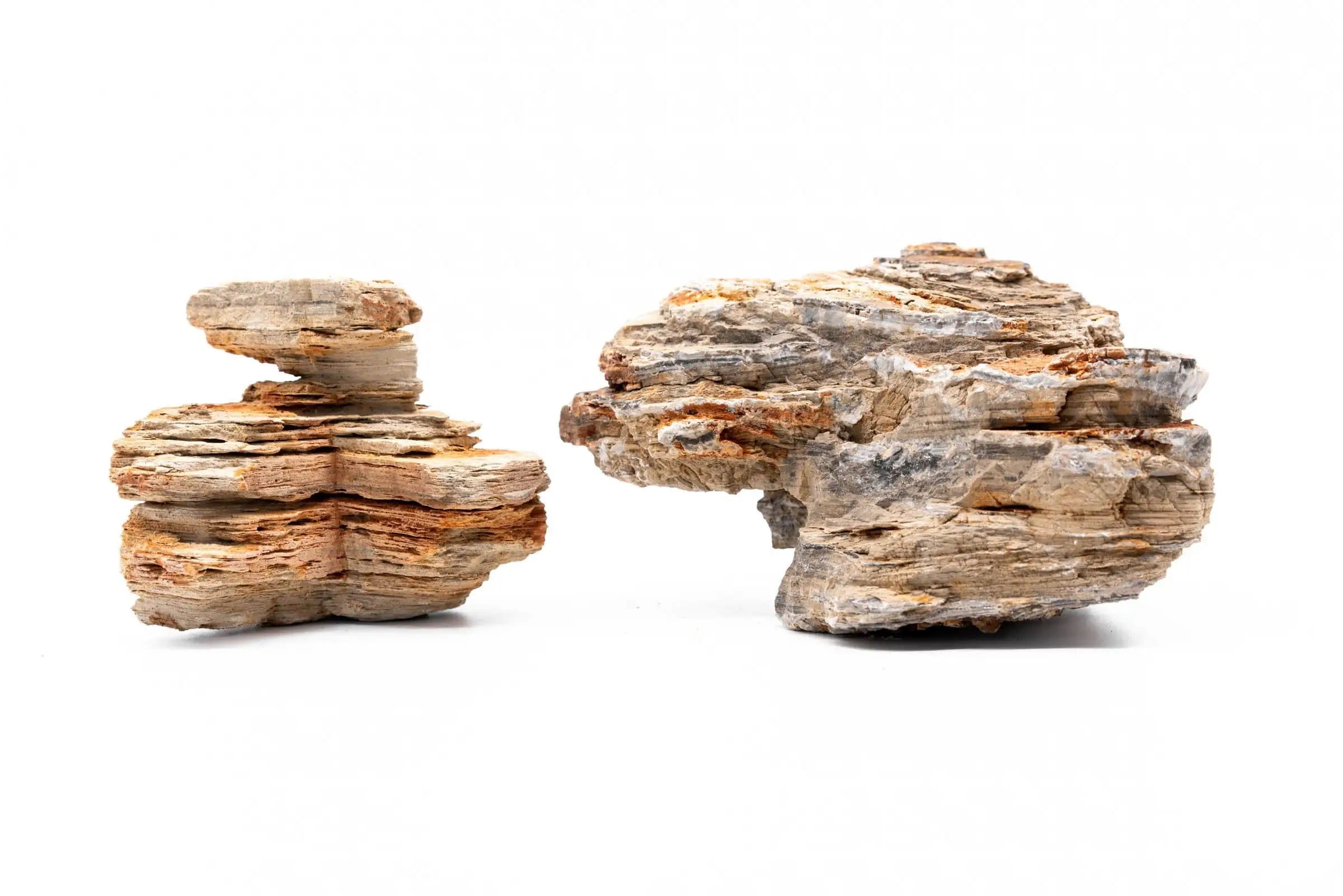
Representative photo. The product you buy may differ in size, colour or packaging.
Lava/Pagoda stone
hardscape
Used for: Aquascaping, Planted tanks, Tank maintenance
Description
Lava rock earns its place by being mostly holes, and FAO's aquaponics manual puts a number on it. Volcanic gravel has a surface area to volume ratio of about 300 square metres per cubic metre depending on grain size, which is the space nitrifying bacteria colonise. The manual calls volcanic gravel the most popular medium for media bed units and recommends it where available, on three grounds: that surface area, low cost, and being almost chemically inert. Almost, and the qualification is worth reading. Once washed of dust and dirt, FAO says volcanic gravel is almost completely inert except for small releases of microelements such as iron and magnesium, and the absorption of phosphate and potassium ions during the first few months of a new system. In a planted tank that is a real effect on your dosing in the first season, and it is not the fertiliser's fault. The manual recommends a grain size of 8 to 20 mm, because smaller clogs with solid waste and larger gives up the surface area that made the material worth using. It is also emphatic about washing: volcanic gravel carries dust and fine particles that can clog a system and harm fish gills. Pagoda stone needs more care than lava rock. FAO's own contrast is limestone, which it does not recommend as a medium, being lower in surface area, heavy, and not inert: limestone is mostly calcium carbonate, it dissolves, and it raises KH and with it pH. Pagoda stone is a shop name rather than a mineral description, so what a given piece is made of is not known from the label. Treat an unfamiliar rock as unknown, and put it in a bucket of your own water with a KH reading taken at the start and again a week later before it goes anywhere near stock.
Source
Figures on this page were read off these pages. Manufacturers and databases do change or retire pages; if a link is dead, tell us with the correction link below.
Was this page useful? Spot anything wrong?