← Back to equipment catalog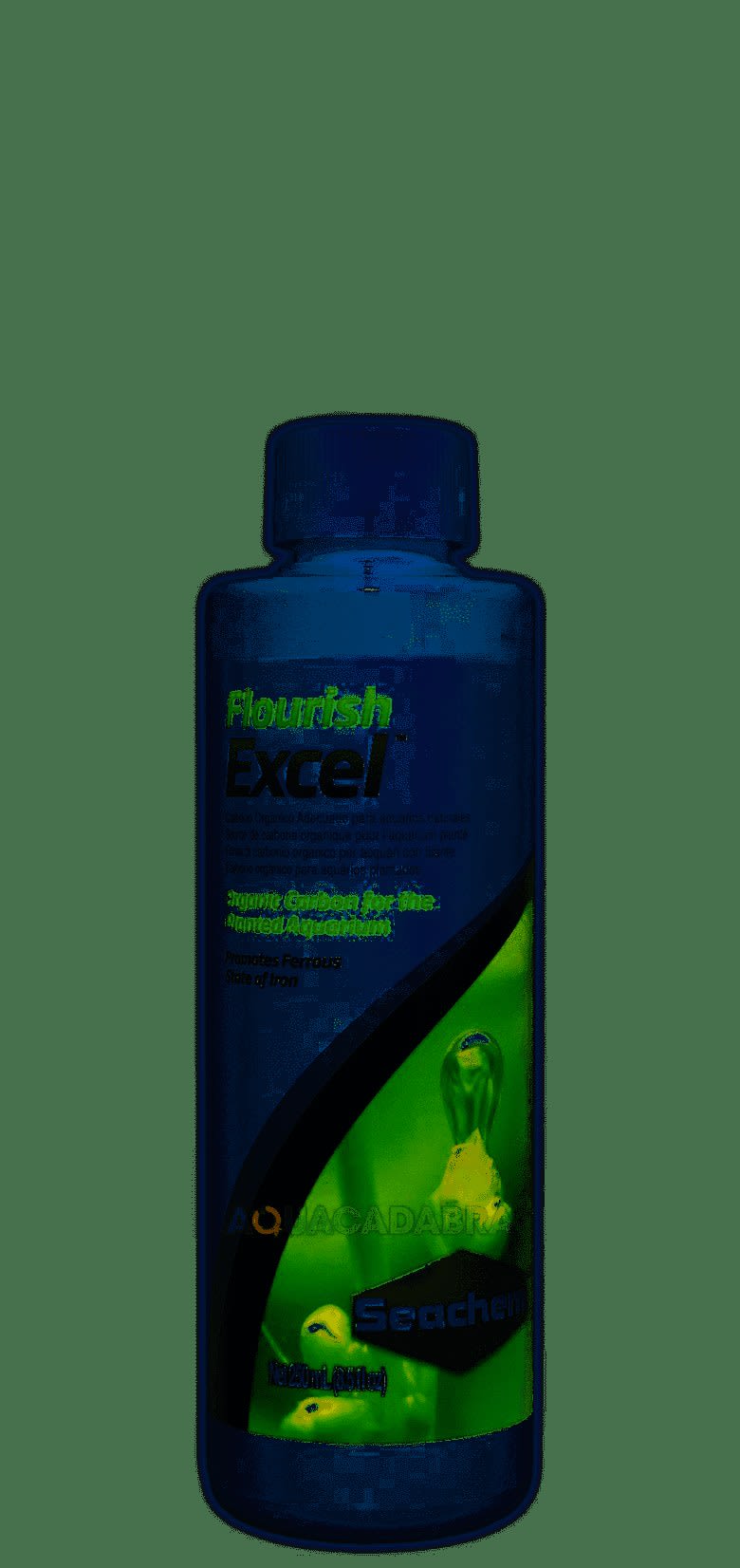
Hero image is from the maintained catalog (brand / product publicly-available assets or vetted stock). The physical product takes precedence.
Fertilizer
Liquid carbon
fertilizer
Used for: Planted tanks, CO2 injection, Tank maintenance
Specifications
| Specification | Seachem Flourish Excel | API CO2 Booster |
|---|---|---|
| Volume | 500 ml | 8 fl oz (237 mL) |
| Dose | On initial use or after a major (> 40%) water change, use 1 capful of Flourish Excel (5 mL) for every 40 L (10 US gallons). Thereafter, use 1 capful for every 200 L (50 US gallons) daily or every other day. | 1 ml for 10 U.S. gallons or 5 ml for 50 U.S. gallons, once a day |
Values as listed by each source when checked on 2026-09-15. Listings change.
Description
This page covers liquid carbon: supplements sold as a carbon source for aquarium plants and dosed from a bottle. We found no reference work on the category, so everything below comes from the Amazon listings of two products with thousands of ratings each. It reports what the makers say, not independent findings. Seachem describes Flourish Excel as a source of bioavailable organic carbon. It also says the product has iron-reducing properties that promote the ferrous form of iron (Fe2+), which plants use more easily than ferric iron (Fe3+). Seachem's directions are one capful (5 mL) for every 40 litres (10 US gallons) on first use or after a water change of more than 40 percent, then one capful for every 200 litres (50 US gallons) daily or every other day. Seachem calls the product completely safe for fish, but in a tank with Anacharis it recommends dosing every other day instead of daily. API sells CO2 Booster, made by Mars Fishcare, as a daily treatment that adds carbon in a form plants can absorb from the water. The listing says it can be used alone or with a CO2 system without altering the aquarium's pH. The doses quoted here are Seachem's directions for Flourish Excel. They are not directions for API's CO2 Booster.
Sources
Figures on this page were read off these pages. Manufacturers and databases do change or retire pages; if a link is dead, tell us with the correction link below.
Keep this species? Spot anything off?