← Back to equipment catalog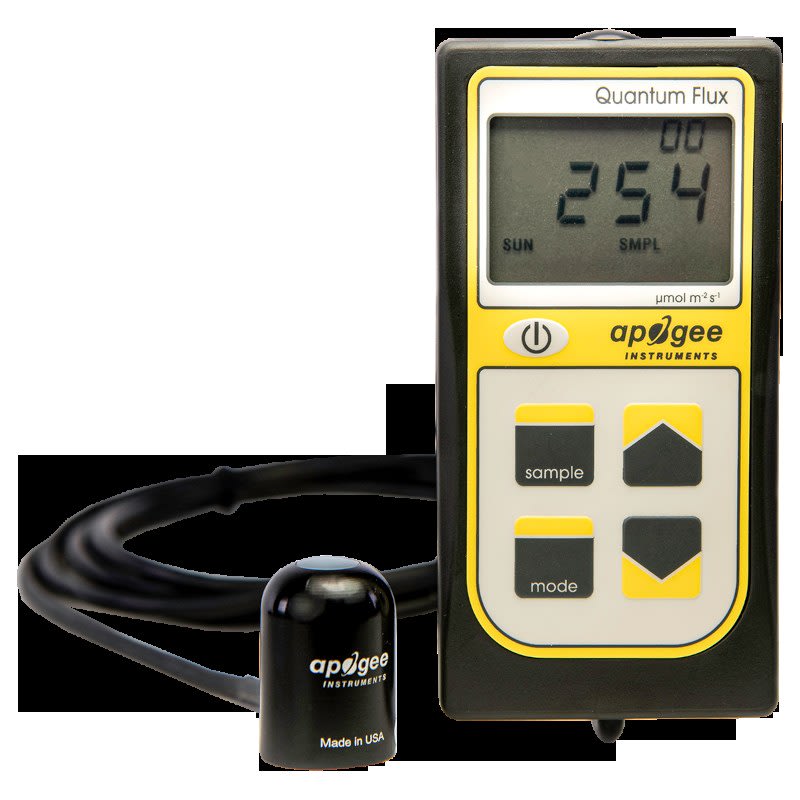
Hero image is from the maintained catalog (brand / product publicly-available assets or vetted stock). The physical product takes precedence.
Monitoring
PAR meter
monitoring
Used for: Planted tanks, Lighting setup, Water testing, Tank maintenance
Description
A PAR meter measures the light a plant can actually use. PAR is photosynthetically active radiation, and a meter reports it as photon flux density in micromoles of photons per square metre per second, which is the unit published plant work states its light in. It answers two questions a lamp specification cannot. The first is whether the light is even. A 2025 study of indoor duckweed cultivation arranged LED strips in twelve connected rows with a gap of 30 mm between rows to ensure even distribution of light, which the authors confirmed using a PAR meter. The second is how much light is left at depth. A 2022 freshwater microcosm study measured photon flux densities at the surface and 40 cm underwater with an underwater PAR meter and used the pair of readings to compute a diffuse attenuation coefficient. Their explanation of what that number means is the most useful sentence here: the diffuse attenuation coefficient reflects the transparency of the water, and the higher the value is, the more turbid the water. That is why those authors took two readings instead of one. The water between the lamp and the plant removes light, and the size of the loss is a property of that water, which is the thing a lamp's own specification cannot tell you. A 2026 tank study shows the third use, which is setting a target and holding it: lights were arranged above the tanks to give uniform light with an average intensity across the top of the cassettes of 100 umol photons, measured with a PAR meter and a quantum sensor. This page publishes no PAR target for any plant. None of these sources gives one for an aquarium, the numbers they do give belong to their own experiments, and a target copied out of a study of duckweed trays or research tanks would be a number with nothing behind it.
Sources
- pmc.ncbi.nlm.nih.gov — https://pmc.ncbi.nlm.nih.gov/articles/PMC11821151/
- pmc.ncbi.nlm.nih.gov — https://pmc.ncbi.nlm.nih.gov/articles/PMC9587460/
- pmc.ncbi.nlm.nih.gov — https://pmc.ncbi.nlm.nih.gov/articles/PMC13322255/
Figures on this page were read off these pages. Manufacturers and databases do change or retire pages; if a link is dead, tell us with the correction link below.
Keep this species? Spot anything off?