← Back to equipment catalog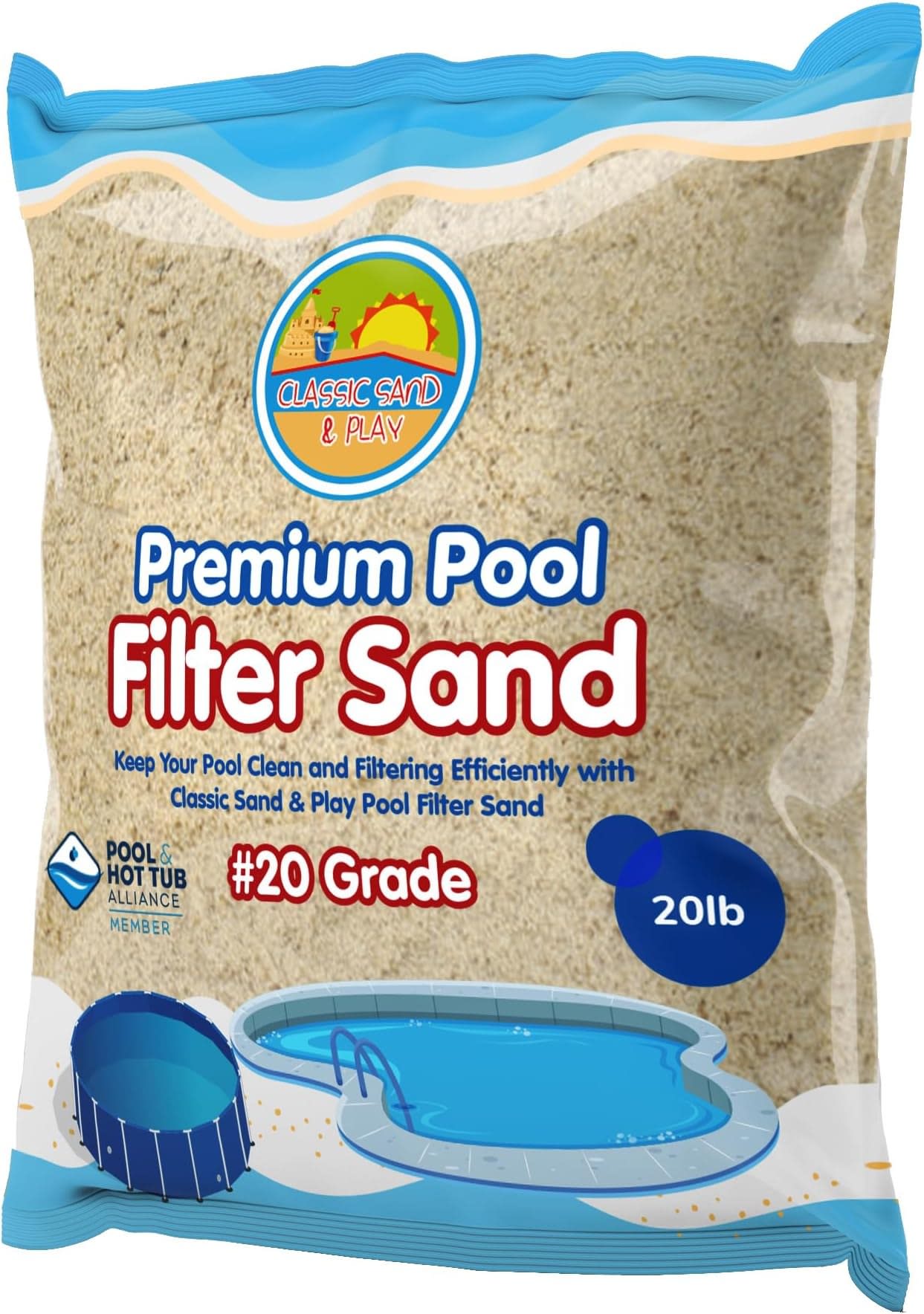
Hero image is from the maintained catalog (brand / product publicly-available assets or vetted stock). The physical product takes precedence.
Substrate
Pool filter sand
substrate
Used for: Corydoras tanks
Specifications
| Specification | HTH Pool Filter Sand | Classic Sand & Play Swimming Pool Filter Sand |
|---|---|---|
| Pack size | 50 lb (22.7 kg) | 20 lbs (9.1 kg) |
| Grain size | Medium | #20 Grade |
| Material | not listed | Silica |
Values as listed by each source when checked on 2026-09-17. Listings change.
Description
Pool filter sand is sold to fill the sand filters of swimming pools and spas, and a laboratory husbandry protocol recommends it as the bottom layer in aquariums for Corydoras catfish. The protocol, published in 2024 in the Journal of the American Association for Laboratory Animal Science, calls a fine-grained sand substrate a crucial addition for these fish. Pool filter sand works well, its authors write, because it is inert, widely available and cost effective. The protocol says to lay the sand about 0.5 to 1 cm deep. That is enough for Corydoras to forage naturally, and thin enough that the fish can reach the bottom of the enclosure and that anaerobic bacteria, which produce poisonous gases, do not accumulate. Fine-grained sand is also, in the authors' words, purportedly gentler on catfish barbels. Healthy Corydoras, they note, often push their barbels into the sand, sometimes so vigorously that their eyes are briefly buried. The authors' adult housing tank and their 568 L pond both have a sand layer under 1 cm thick, while the larval tanks are left bare for ease of cleaning. A 2014 PLoS ONE study of sediment sifting in Neotropical cichlids used the same material. Chironomid larvae were spread on the bottom of an all-glass aquarium, and the bottom was either left bare or covered 1, 2 or 3 cm deep with clean pool-filter sand of uniform grain diameter, to measure how well the fish could retrieve prey from different depths of sediment. As sold, the sand is a pool product. The CDC's Model Aquatic Health Code, guidance for public aquatic facilities, requires their filter media to be certified to NSF/ANSI 50 and to stay within the size specifications of the filter maker and that standard, or else approved by the authority having jurisdiction with proper engineering justification. The two listings in the table are pool products, and neither describes its own sand as being for aquariums. HTH sells a 50 lb container of what it calls medium filter sand for sand filters in pools and spas. The title of Classic Sand & Play's 20 lb bag calls it #20 grade silica, and the seller says it is pre-washed and kiln dried and has no harsh chemicals, chlorines or additives.
Sources
- pmc.ncbi.nlm.nih.gov — https://pmc.ncbi.nlm.nih.gov/articles/PMC11467888/
- pmc.ncbi.nlm.nih.gov — https://pmc.ncbi.nlm.nih.gov/articles/PMC3945966/
- cdc.gov — https://www.cdc.gov/model-aquatic-health-code/media/pdfs/2024/11/5th-Ed-MAHC-Code-508.pdf
- amazon.com — https://www.amazon.com/dp/B09R82MKQD
- amazon.com — https://www.amazon.com/dp/B0CDSYNZM7
Figures on this page were read off these pages. Manufacturers and databases do change or retire pages; if a link is dead, tell us with the correction link below.
Keep this species? Spot anything off?