← Back to equipment catalog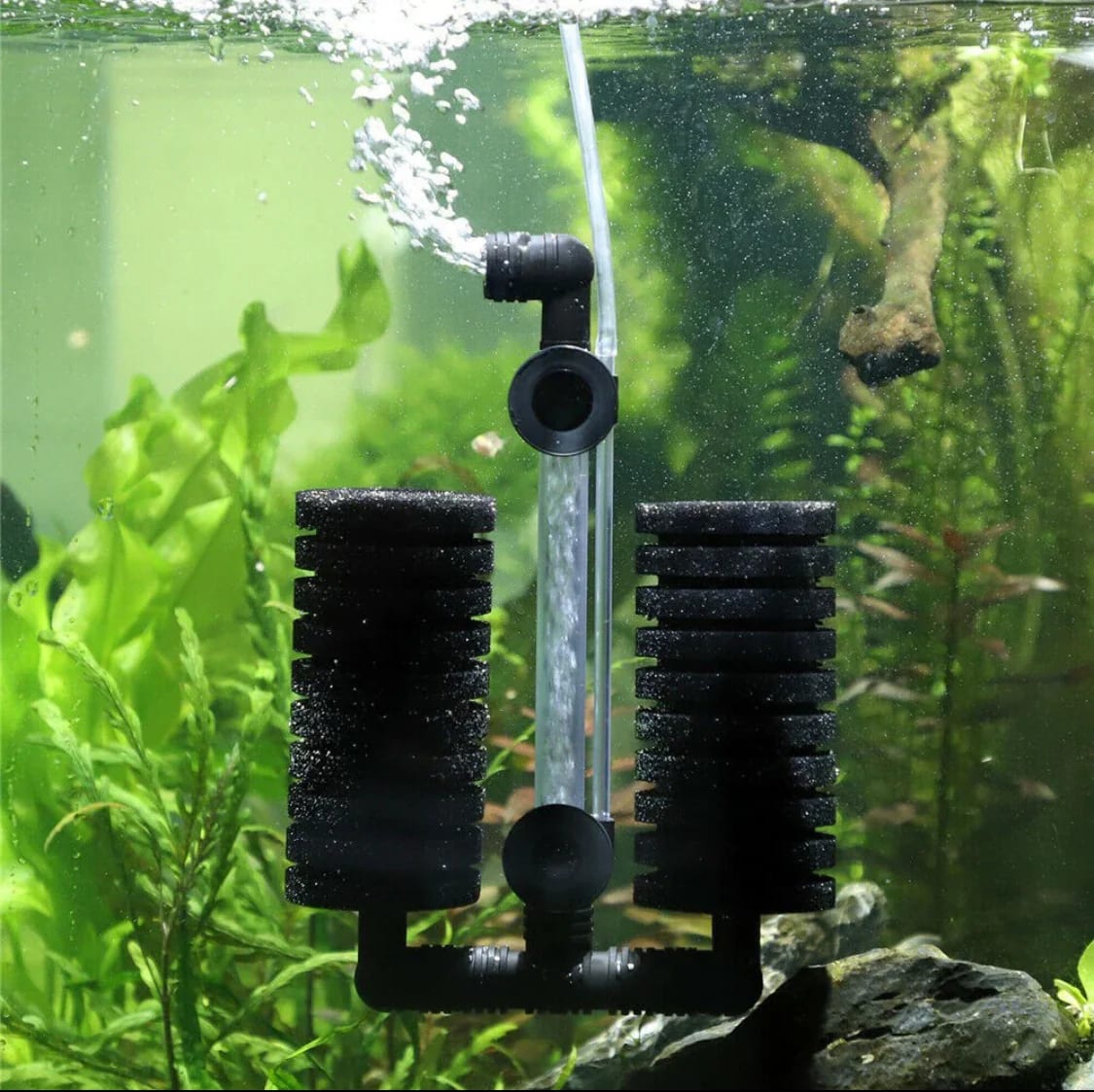
Hero image is from the maintained catalog (brand / product publicly-available assets or vetted stock). The physical product takes precedence.
Filtration
Sponge filter
filter
Used for: Tank maintenance
Description
The useful part of a sponge filter is the bacterial film growing on the foam, and that film can be moved from tank to tank. Merck's Production Methods in Aquaculture describes biological filtration as two sets of nitrifying bacteria establishing on biofiltration surfaces, converting the ammonia that comes out of protein and nucleic acid metabolism first into nitrite, a toxic intermediate, and then into nitrate, which is much less toxic. The manual talks about surfaces rather than about any particular medium, and a block of open-cell foam sitting in a slow current is a lot of surface in a small space. Because the culture lives on the surface rather than inside the housing, a sponge can be seeded before it is needed. The Merck aquarium chapter gives the procedure: before buying new fish, run the previously disinfected sponge filter in an established tank that is free of disease, so the sponge is inoculated with nitrifying bacteria. The reason it gives is practical. This avoids the water quality problems that turn up in newly set up aquaria, which is exactly what a hospital tank thrown together on the evening a fish gets sick is. The same paragraph closes the loop at the other end: once the fish have cleared quarantine, the tank and its equipment are disinfected and stored dry until they are needed again. Everything past this point is keeping practice rather than manual text. Most people run a spare sponge permanently in the display tank so a cycled filter is always on hand. Rinsing one in used tank water instead of under the tap treats the culture as the thing you are actually keeping. No flow rate, pore size or rated tank volume appears here, because nobody publishes those figures for a category rather than for a product.
Sources
- merckvetmanual.com — https://www.merckvetmanual.com/exotic-and-laboratory-animals/aquarium-fish/management-of-aquarium-fish
- merckvetmanual.com — https://www.merckvetmanual.com/exotic-and-laboratory-animals/aquaculture/production-methods-in-aquaculture
Figures on this page were read off these pages. Manufacturers and databases do change or retire pages; if a link is dead, tell us with the correction link below.
Keep this species? Spot anything off?