← Back to equipment catalog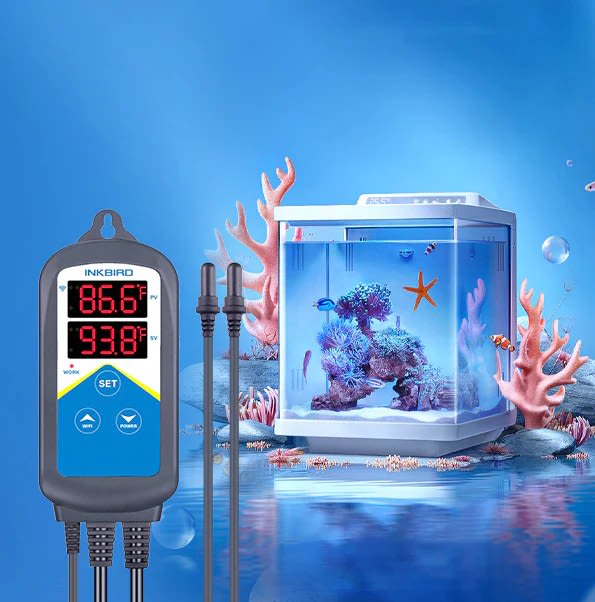
Hero image is from the maintained catalog (brand / product publicly-available assets or vetted stock). The physical product takes precedence.
Temperature
Temperature alarm
heater
Used for: Tank maintenance
Description
A temperature alarm watches one number and shouts when it leaves a set range. FAO's guide to recirculation aquaculture explains why that job exists at all: intensive fish farming requires close monitoring and control of the production in order to maintain optimal conditions for the fish at all times, and technical failures can easily result in substantial losses, so alarms are vital installations for securing the operation. On a farm the alarm is one output of a larger system. Surveillance can be computerized with a large number of measuring points and alarm control, and in many modern farms a central control system can monitor and control oxygen levels, temperature, pH, water levels and motor functions. The sequence FAO describes is the one a standalone alarm compresses into a beep: if any of the parameters moves out of the preset hysteresis values, a start/stop process will try to solve the problem, and if the problem is not solved automatically, an alarm will start. The control system must therefore be fitted with an alarm system, which will call the personnel if any major failures are about to occur. Two details carry over to a tank. The first is the reaction time FAO recommends, less than 20 minutes, even where automatic back-up systems are installed, which is what an alarm has to buy you. The second is that FAO puts the alarms themselves on the maintenance schedule: check alarms, make alarm tests. An alarm nobody has tested is not a safeguard.
Source
Figures on this page were read off these pages. Manufacturers and databases do change or retire pages; if a link is dead, tell us with the correction link below.
Keep this species? Spot anything off?